
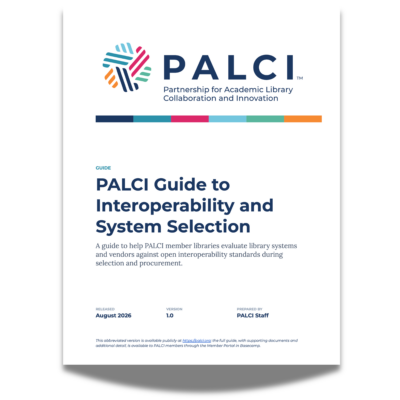
Drexel Hill, PA — The Partnership for Academic Library Collaboration and Innovation (PALCI) has published the PALCI Guide to Interoperability and System Selection, a resource to help academic and research libraries evaluate whether new systems will support open standards and effective collaboration before contracts are signed.
The guide walks readers through what interoperability means in practice, why it matters for cost, flexibility, and long-term access, and what open standards, as opposed to closed proprietary interfaces, allow libraries to do that closed systems don’t. It is written primarily for library staff in PALCI member organizations, but also for the broader library community, including the vendors and publishers who serve them, with the goal of raising awareness and the baseline expectation for openness across the field.
“System choices made in isolation can quietly limit what a library is able to do collectively down the road,” said Jill Morris, Executive Director of PALCI. “This guide gives libraries a shared vocabulary and a set of questions to ask during procurement processes, so interoperability is part of the decision up front rather than an expensive or surprising problem to solve later.”
Carl Piraneo, PALCI’s Director of Resource Sharing and Member Services noted, “Interoperability determines how much friction there is in collaboration. PALCI’s EZBorrow service works so well because open standards let libraries with very different local systems participate on equal footing, and the services we are planning next will depend on that same groundwork.”
The guide is available now at palci.org. A companion resource with additional technical detail relevant to PALCI member organizations is available to individuals employed by PALCI member libraries through PALCI’s Basecamp member portal (login required).
